
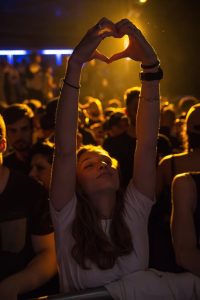
Recently, we attended a multi-day event with large crowds. How did we cope with PDA? By doing things differently, of course!
First of all, planning. We were fortunate to be invited to volunteer at the venue while the event was being set up. This gave us a chance to scope the place out, discuss our plans in the context of the venue itself, and befriend some of the stewards who then went out of their way to help us when they saw us on the event days. In particular, we wanted to identify some likely quiet areas we could use for retreat and recovery.
At home, we have “packing lists” of all of the items we have found helpful at similar events. This helps to make sure we don’t forget anything we might want. For this event, we knew from previous years to bring personal FM radios because the event audio is broadcast locally so you can hear it in parts of the venue that don’t have good PA. We also packed plenty of sensory and regulating items: fidgets, blankets, cuddles, and massage brushes.
Possibly most importantly, we didn’t plan to arrive on time. We got up and dressed leisurely and arrived when we were ready. Most days, when we arrived, we stayed in the car for a while with a drink and a snack to recover from the journey before venturing into the venue.
We took breaks whenever we wanted to. We used the car as a base. We had a picnic table and chairs that we were able to discretely set up in the car park without getting in the way of other traffic and we had plenty of food and drinks in the car.
Inside the venue, we identified quiet spots. Sometimes we sat on the edge of the main crowd. At other times we took advantage of the special needs provision and sat in one of the large lounges or a designated quiet area. Our favourite area was an open-air balcony usually reserved for wheelchair users and their families. At this event, the balcony was open to all but not many found it. We generally shared the area with only one or two other families and this gave us the perfect balance between being out in the main stadium but, at the same time, maintaining a personal space and separation from the crowded areas. Another advantage was that we could do whatever we needed to keep regulated without disturbing others in the crowd.
Finally, when the event was over, we took time off. It took our PDAer about a week to recover her energy levels and we didn’t plan anything for her during this time.
Don’t be afraid to stand out from the crowd. Instead, embrace the difference and be happy to achieve your goals in your own unique way.
Photo by Alfonso Scarpa on Unsplash